High Blood Pressure Social Media Resources
Share these graphics and sample posts to help raise awareness about high blood pressure, a major risk factor for heart disease.
General High Blood Pressure Graphics
Review the image details and links. If available, use the previous and next controls to move through the image gallery.
What do your blood pressure numbers mean?
Normal range:
- Systolic: <120 mm Hg
- Diastolic: <80 mm Hg
Elevated range:
- Systolic: 120 - 129 mm Hg
- Diastolic: <80 mm Hg
High blood pressure range:
- Systolic: 130 mm Hg or higher
- Diastolic: 80 mm Hg or higher
4 Blood Pressure Questions to Ask Your Healthcare Provider at Every Visit
1. What was my blood pressure reading and what do the numbers mean for me?
2. How often should I have my blood pressure checked?
3. How can I control my blood pressure if it's high?
4. Can any medicines that I take affect my blood pressure?
Choose Foods Low in Sodium
Choose foods lower in sodium more often: Grilled or baked chicken, low sodium cheeses, low-salt nuts and pretzels, spices and herbs.
Choose foods higher in sodium less often: Bacon, hot dogs, most cheeses, salty chips, crackers or nuts, condiments such as soy sauce and ketchup.
How to Accurately Check your Blood Pressure
Before:
- Avoid exercising, drinking caffeine, or smoking for 30 minutes prior.
- Go to the bathroom.
- Uncover your arm for the cuff.
- Sit and relax for at least 5 minutes.
During:
- Put your feet flat on the floor.
- Don't talk.
- Rest your arm on a table so it's supported and at the level of your heart.
Healthy Blood Pressure for Healthy Hearts
Blood pressure higher than 130/80 mm Hg can cause serious health problems:
- Heart disease
- Stroke
- Kidney disease
- Dementia
Have your blood pressure checked at every healthcare provider visit.
What puts you at risk for high blood pressure?
Age - Blood pressure tends to increase with age but it can also affect you at a younger age.
Family history and genetics - High blood pressure often runs in families.
Sex - Before age 60, more men than women have high blood pressure. After 60, more women than men have it.
Lifestyle habits - Eating too much salt, smoking and not getting enough physical activity can raise our blood pressure.
Race or ethnicity - While anyone can have high blood pressure, African Americans tend to get it at a younger age.
Steps to Take to Lower Your High Blood Pressure
Set goals - Work with your healthcare provider to set blood pressure numbers that are healthy for you.
Take small steps - Make gradual healthy lifestyle changes.
Manage stress - Practice mindful meditation for even 10 mins. a day helps relieve stress.
Managing Stress
Why should I change?
Stress can contribute to high blood pressure and other heart risks. If it goes on for a long time, it can make your body store more fat.
How can I change?
- Practice mindful meditation for 10 minutes a day.
- Talk with your doctor if you have trouble managing stress on your own.
- Share a funny video, joke or inspirational quote with a friend.
Eating Healthy Foods
Why should I change?
A diet low in sodium and saturated fat - like the DASH eating plan - can lower your blood pressure as effectively as medicines.
- How can I change?
- Add one fruit or vegetable to every meal.
- If you get fast food, ask for a salad instead or fries.
- Try Meatless Monday.
- Commit to one salt-free day a week.
- Use herbs for flavor.
High Blood Pressure GIFs
Review the image details and links. If available, use the previous and next controls to move through the image gallery.
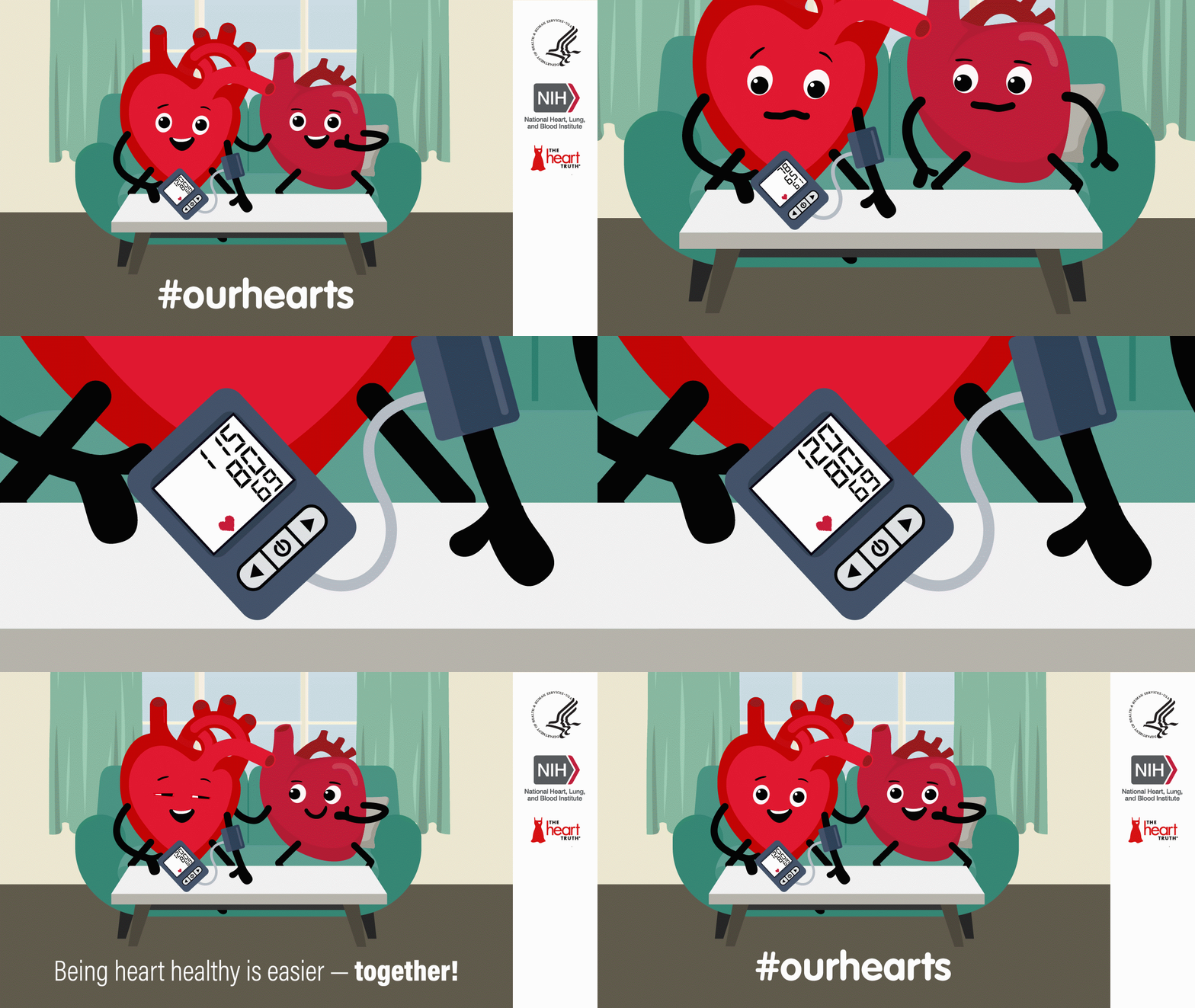
Track your blood pressure numbers together
Being heart healthy is easier - together! #ourhearts
Warning Signs for High Blood Pressure
High blood pressure can go undetected for a long time while it's damaging your body. Put yourself first.
Pay attention to possible warning signs: Tiredness, loss of energy, sleep disturbances, hot flashes and sweating, fluid retention, headaches, blurred vision, chest pain - some women report their bra feeling too tight.
Have your blood pressure checked at every healthcare provider visit.
High blood pressure is a major risk factor for heart disease.
Nearly 19% of women in their 20s and 30s have high blood pressure. You don't have to be one of them. Have your blood pressure checked at every healthcare provider visit.
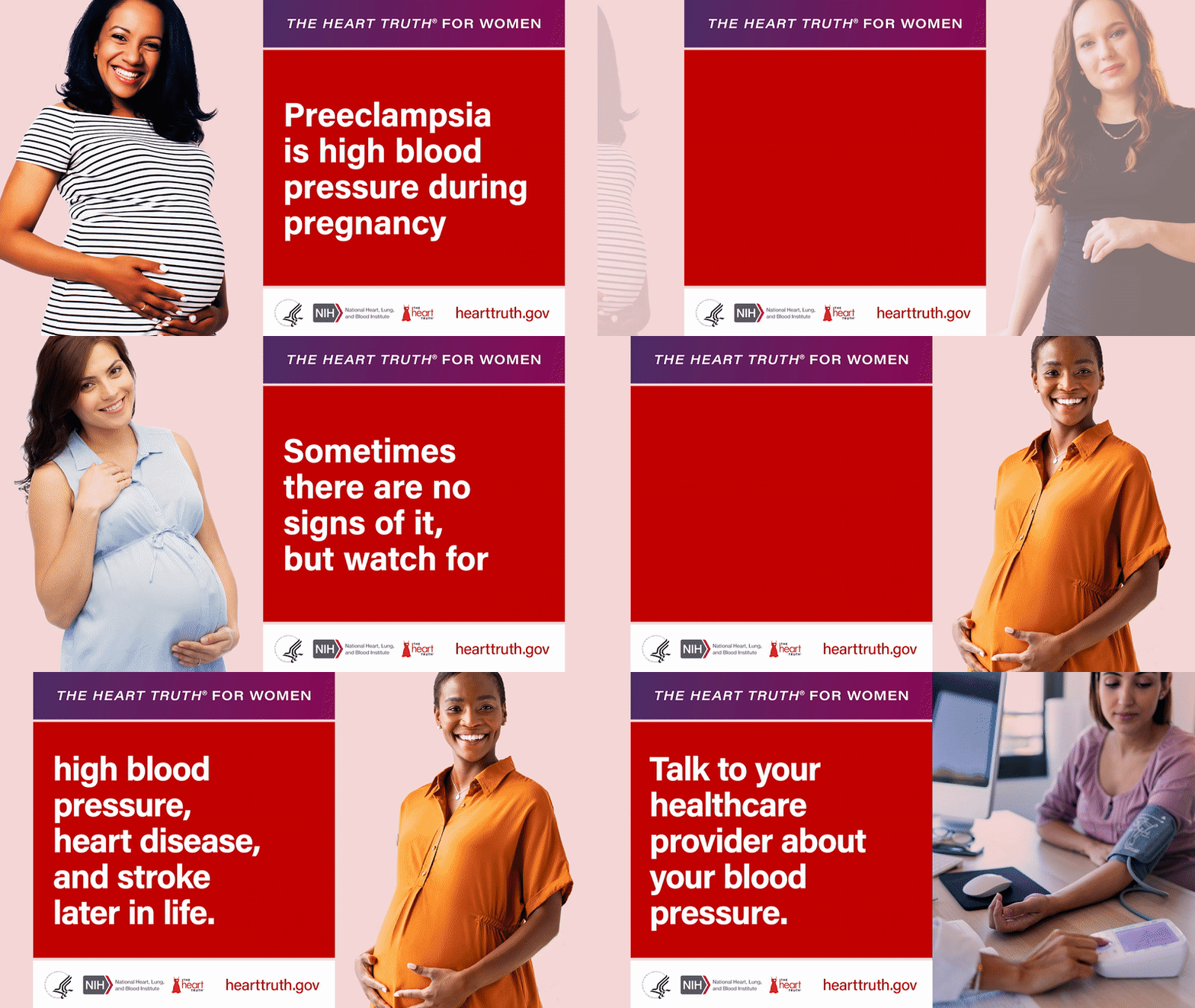
Preeclampsia
Preeclampsia is high blood pressure during pregnancy and signs your organ are not working well. It develops after 20 weeks of pregnancy. Sometimes there are no signs of it, but watch for sudden weight gain over 1-2 days or swelling in your hands or face.
Having preeclampsia increases your risk of high blood pressure, heart disease, and stroke later in life. Talk to your healthcare provider about your blood pressure.
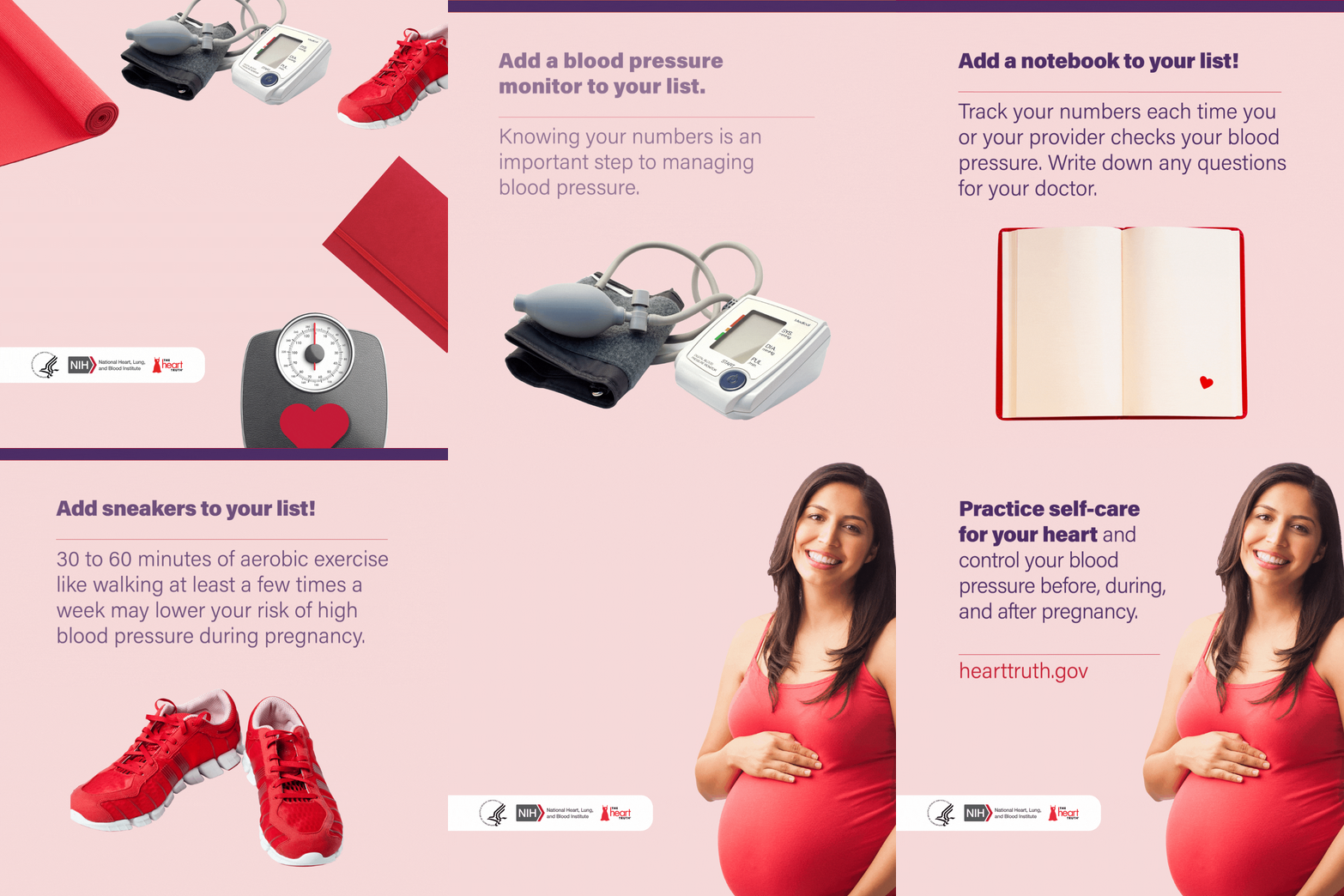
Heart-healthy Pregnancy Registry
Practice self-care for your heart and control your blood pressure before, during, and after pregnancy.
The “Heart-Healthy Pregnancy Registry” spotlights items including a blood pressure monitor, notebook, scale, sneakers, and yoga mat along with a message about how they can help you manage your blood pressure.
Warning Signs of a Heart Problem During Pregnancy
Watch for warning signs of a heart problem, including high blood pressure, during and after pregnancy. Signs include: worsening headache, overwhelming tiredness, dizziness, trouble breathing, chest or belly pain, swelling, nausea.
If you feel like something is wrong, get medical care right away.
High Blood Pressure in Women
Review the image details and links. If available, use the previous and next controls to move through the image gallery.
4 Blood Pressure Questions to Ask Your Healthcare Provider if You're Pregnant or Thinking of Becoming Pregnant
1. Are my blood pressure numbers in a healthy range?
2. Am I at risk for developing heart-related problems during or after pregnancy?
3. If I'm at risk, will this affect my pregnancy care or birthing plan?
4. What can I do to lower my risk for heart-related problems during pregnancy?
Pregnancy and High Blood Pressure
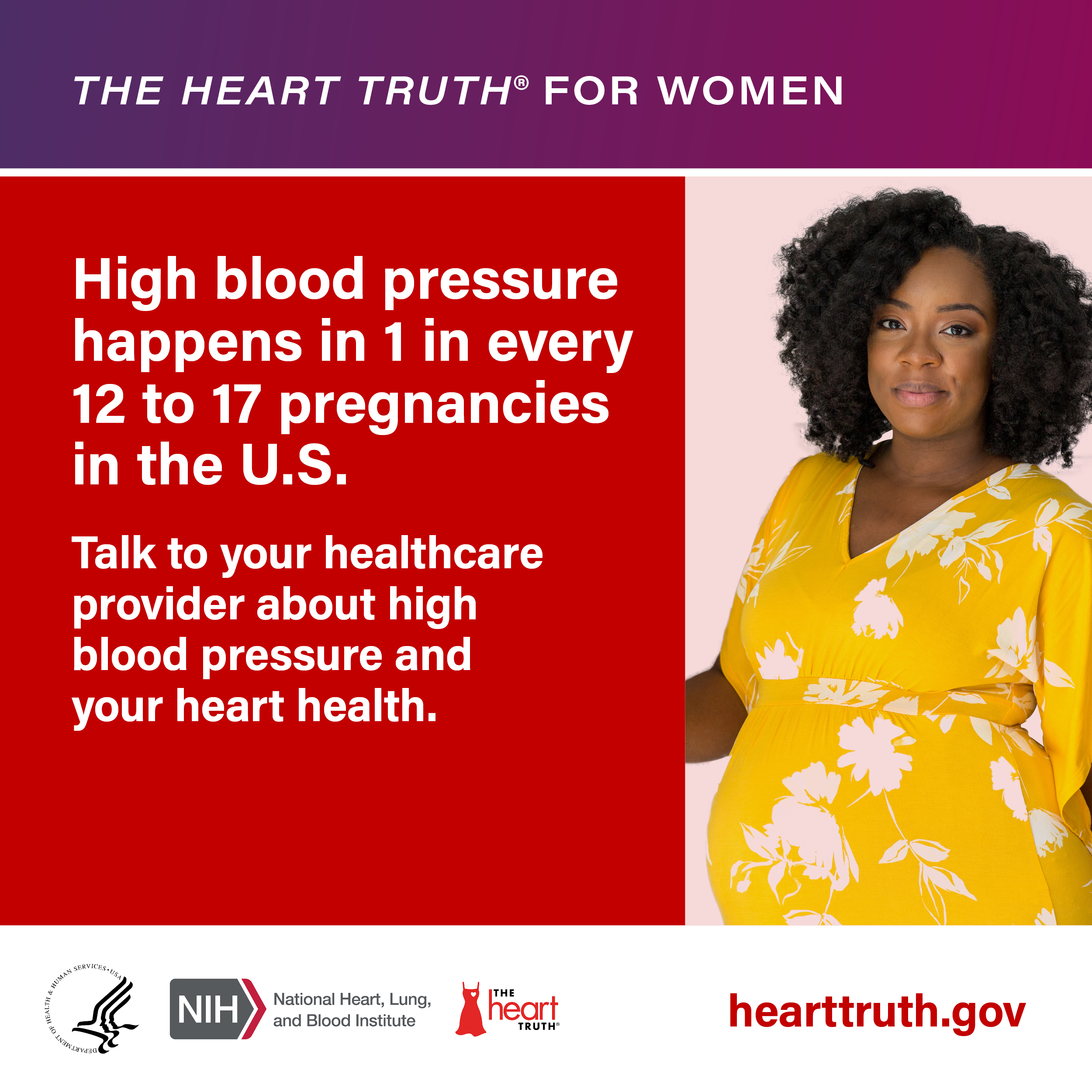
High blood pressure happens in 1 in every 12 to 17 pregnancies in the U.S.
Talk to your healthcare provider about high blood pressure and your heart health.
Pregnancy and High Blood Pressure
High blood pressure happens in 1 in every 12 to 17 pregnancies in the U.S.
Talk to your healthcare provider about high blood pressure and your heart health.
Black Woman and High Blood Pressure
Nearly 58% of Black women over age 20 have high blood pressure. Have your blood pressure checked at every healthcare provider visit.
Hispanic/Latina Woman and High Blood Pressure
About 35% of Hispanic/Latina women have high blood pressure. Have your blood pressure checked at every healthcare provider visit.
Las Mujeres Hispanas/Latinas y Presion Arterial Alta
Alrededor de 35% de las mujeres hispanas/latinas tienen presion arterial alta. Tomese la presion arterial en cada visit.
Women and High Blood Pressure
It's never too early to start thinking about your blood pressure. Have your blood pressure checked at every healthcare provider visit.
May is High Blood Pressure Education Month
Review the image details and links. If available, use the previous and next controls to move through the image gallery.
May is High Blood Pressure Education Month!
Know and track your blood pressure numbers.
May is High Blood Pressure Education Month!
Getting regular physical activity helps lower and control blood pressure.
May is High Blood Pressure Education Month!
A heart-healthy lifestyle can help keep your blood pressure in a healthy range.
May is High Blood Pressure Education Month!
Managing stress can help lower high blood pressure.
May is High Blood Pressure Education Month!
Talk to your healthcare provider about what your blood pressure numbers mean for you.
May is High Blood Pressure Education Month!
If you're planning to become pregnant, are pregnant, or recently had a baby, talk to your healthcare provider about high blood pressure and managing your heart health.